
12 Signs a Tree Needs to Be Removed (2026 Gulf Coast Guide)
Most problem trees give warnings before they fail. Here's how to read the signs, which problems can be fixed, and when removal is the safer choice.
Get a FREE estimate from a local tree service.
Call (281) 337-4783 for a FREE Estimate- Since 1992
- on Google
- OSHA-Trained
- Se Habla Español
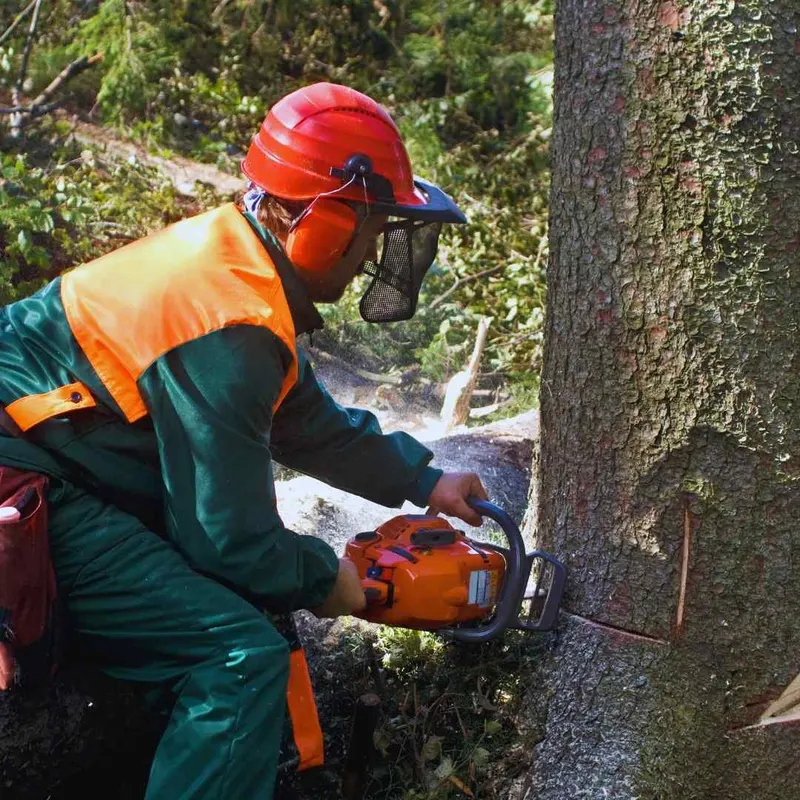
Can This Tree Be Saved, or Should It Come Down?
Removing a tree is a big decision. Mature trees add shade, beauty and value, and nobody wants to lose one unnecessarily. But a dead, decaying or unstable tree near your home is a real hazard, especially on the Gulf Coast, where tropical storms, saturated clay soil and salt air put extra stress on trees every year.
The good news is that most trees show warning signs long before they fail. Below are 12 signs to look for, what each one usually means, and whether the fix is pruning, treatment or removal. Use this as a starting point, then have a professional confirm what you're seeing in person.
Call (281) 337-4783 for a FREE Estimate
Quick Reference: Warning Signs at a Glance
| Sign | Urgency | Often Fixable? |
|---|---|---|
| New lean with soil lifting at the base | High | Rarely |
| Large cracks or splits in the trunk | High | Sometimes |
| Dead or dying tree | High | No |
| Fungus or mushrooms at the base | Medium to high | Depends on extent |
| Hollow trunk or large cavities | Medium to high | Depends on extent |
| Large dead branches | Medium | Often, by pruning |
| Storm damage | Varies | Often |
| Roots damaging structures | Medium | Sometimes |
| Bronzing palm fronds | High for palms | No, if Lethal Bronzing |
1. The Tree Has a New or Worsening Lean
Plenty of trees grow with a gradual lean and stay stable for decades. The red flag is a lean that's new or getting worse, especially after a storm or heavy rain. If the soil on the opposite side of the lean is cracking, mounding or lifting, the root plate may be pulling out of the ground. That tree can fall without warning. Keep people and cars clear and call promptly.
2. There Are Large Cracks or Splits in the Trunk
Deep vertical cracks, splits where two trunks meet, or cracks that run into the ground indicate serious structural weakness. On the Gulf Coast, we often see large cracks in the main trunks of tall pecans, a common precursor to failure. Some cracked trees can be reduced or partly removed to take load off the weak point; others need to come down.
3. The Tree Is Dead or Dying
A dead tree only gets more dangerous over time as the wood dries out and becomes brittle. Signs include no leaves in the growing season, bark falling off, brittle twigs that snap easily and no green under the bark when scratched. A tree that's dying back from the top down, losing more of its crown each year, is often headed the same way. Dead trees near homes, driveways and play areas should be removed.
4. Fungus or Mushrooms Are Growing at the Base
Mushrooms, conks or shelf fungi on the trunk or around the roots usually mean wood is decaying inside. Root rot is a particular concern in the saturated clay soils around Dickinson, League City and the rest of the coast. Because decay is often hidden, a tree can look healthy on top while its support system is failing. Have it inspected.
5. The Trunk Is Hollow or Has Large Cavities
Some hollow trees remain stable, but large cavities, especially near the base or with thin walls of sound wood around them, reduce strength. The bigger the hollow relative to the trunk, the higher the risk.
6. Large Branches Are Dead or Hanging
Dead limbs in the upper canopy, or "hangers" broken and caught in other branches, can fall at any moment. Often the fix is professional pruning rather than removal. But if a large portion of the crown is dead, the tree may be in decline.
7. The Tree Was Badly Damaged in a Storm
After tropical weather, look for split trunks, torn bark, broken tops, and limbs ripped off at the trunk. Trees that lost a large share of their crown or have major trunk damage may not recover. Smaller damage can often be cleaned up with proper cuts; see tree surgery.
8. Roots Are Damaging Your Property
Roots lifting sidewalks, cracking driveways or threatening foundations are a common reason for removal, especially when a large tree was planted too close to the house. Root pruning is risky because cutting major roots can destabilize the tree. When roots and structures can't coexist, removal is usually the cleaner solution.
9. The Tree Is in a Dangerous Spot
Sometimes the tree itself is fine, but its location isn't: hanging over a bedroom, growing into power lines, blocking sight lines at a driveway, or crowding a foundation. Pruning can often solve the problem; if not, removal may be the safest option.
10. The Tree Has a Weak "V" Shaped Fork
Two trunks of similar size growing from one point in a tight V shape often have bark trapped between them, which creates a weak joint that can split apart, especially in high winds. Young trees can be corrected by pruning; on mature trees with a cracked fork, removal or major reduction may be needed.
11. There's Serious Pest Damage
Small holes in the bark, sawdust at the base, sap or pitch tubes on pines, and sudden dieback can point to boring insects. Pines that turn brown throughout the crown may already be dead. A professional can tell you whether the tree can recover.
12. Your Palm Has Bronzing Fronds
On the Gulf Coast, palms have their own warning sign. Lethal Bronzing disease has been spreading in Galveston County. Watch for lower fronds turning reddish-bronze with the color moving upward, sudden fruit drop and a collapsing spear leaf. Infected palms can't be saved and can spread the disease to healthy palms, so prompt removal is important. See palm tree removal.
Why You Shouldn't Remove a Large Tree Yourself
Tree removal is the most dangerous job in tree care. A tree that is cracked, leaning or decayed behaves unpredictably when cut, and trunks and limbs are far heavier than they look. Near a house, fence or power line, one wrong cut can cause serious injury or expensive damage. Professional crews use rigging, the right equipment and a plan for every piece. Always hire an insured company.
What Happens When You Call Us
- We look at the tree in person and talk through what we see.
- We give you honest options: pruning, treatment, or removal.
- If removal is the right call, you get a free estimate. Tree removal starts at $400.
- We take the tree down safely, clean up, and can grind the stump.
Tree Removal Signs FAQ
Is a Leaning Tree Always Dangerous?
No. Trees that have grown at an angle for years may be stable. A new or increasing lean, especially with soil lifting at the base, is a warning sign.
Can a Tree With Mushrooms Be Saved?
Sometimes. Mushrooms indicate decay, but how far it has spread determines the answer. Have the tree inspected.
How Can I Tell If a Tree Is Dead?
No leaves in the growing season, bark falling away, brittle twigs and no green tissue under the bark are common signs.
How Much Does Tree Removal Cost?
Our tree removal service starts at $400. The final price depends on size, location, access and cleanup.